Cultural heritage objects and areas
Oziorsk (Darkiemis) district
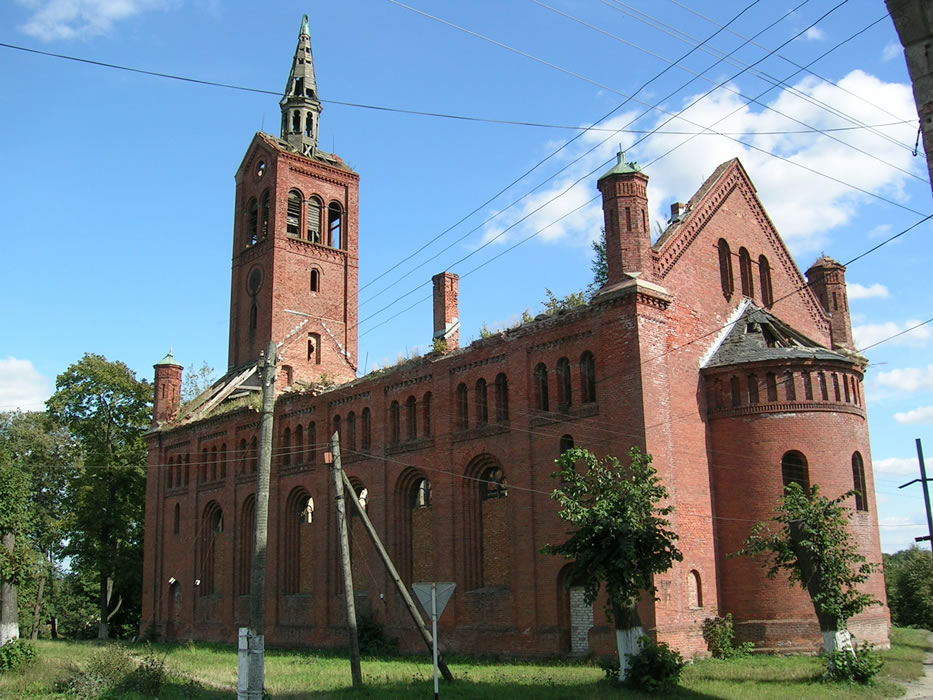
Darkiemis church
(Sovietskaja st.32, Oziorsk)
The first church in the town was built in 1646. In its place, a new rubbed red brick neo-gothic church was erected in 1842. Lithuanian services were held there until 1890. In 1892 a tall tower was built for the money of the parishioners. The church did not suffer during Second world war. The unsupervised church collapsed, and its roof collapsed in 1994. In 2007 it was granted the status of a cultural heritage object, in 2012 the building was partially preserved, it stands empty.
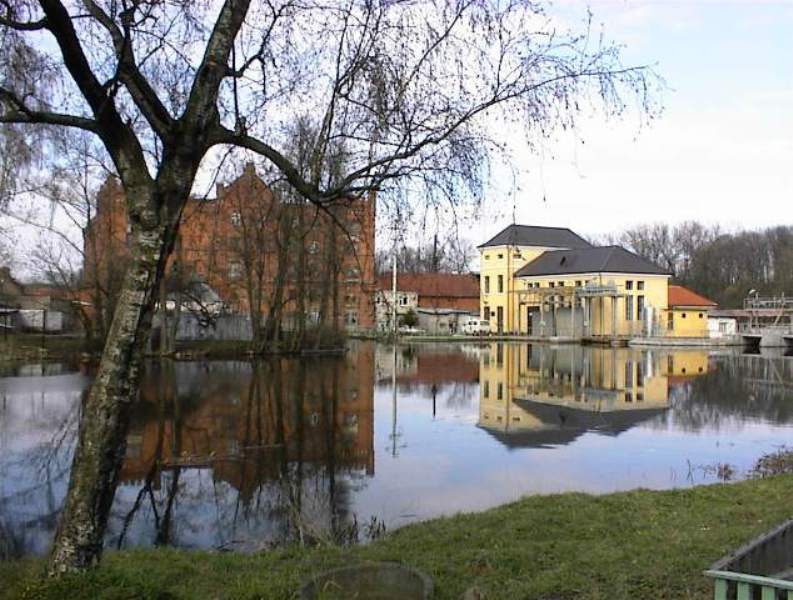
Hydroelectric building
To this day, the first hydroelectric building in the whole Karaliaučius area has survived. After the dam of the Ungura (Angrapa) river, the hydroelectric power plant was built in 1880. Electricity was also used to illuminate the city streets - in 1886 Darkiemis became the first city in East Prussia and the second in Germany after Berlin to be illuminated. The building was included in the list of cultural heritage objects in 2007.
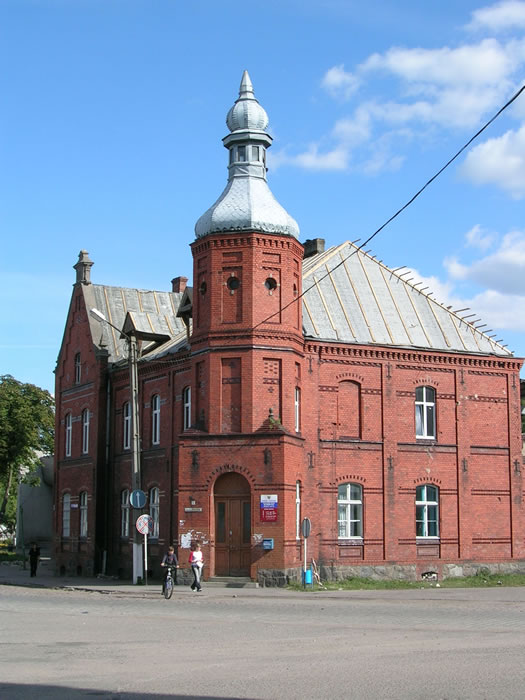
The post office building
(Pobedy sq. 1, Oziorsk)
The post office building was erected in the center of the town in 1896-1897. It is a neo-gothic style building with a tower, that has housed a telephone, telegraph station and post office all along. And now there is a post office here, the building is included in the list of cultural heritage sites.
The building originated in the late XIX century and has hardly changed to this day. The four-storey building that adorned the city housed various shops, a sewing shop and apartments. In 1948 an agricultural technical school was moved to that building.
Several historical houses
(F.Dzerzhinskiy street)
In the current F.Dzerzhinskiy street there are several historical houses of interesting architecture from the beginning of the XX century. The house marked number 3 was built as the new town hall, but later apartments for medical staff were built here. Now there is an employment office on the first floor of the building, and residents are located on the second floor. The two-storey red-brick building marked with the sixth number with risalite and bay window is used as a residential house. In 2007 it was granted the status of a cultural heritage object of local significance, and the houses marked with numbers 3 and 5 on this street received the same status.
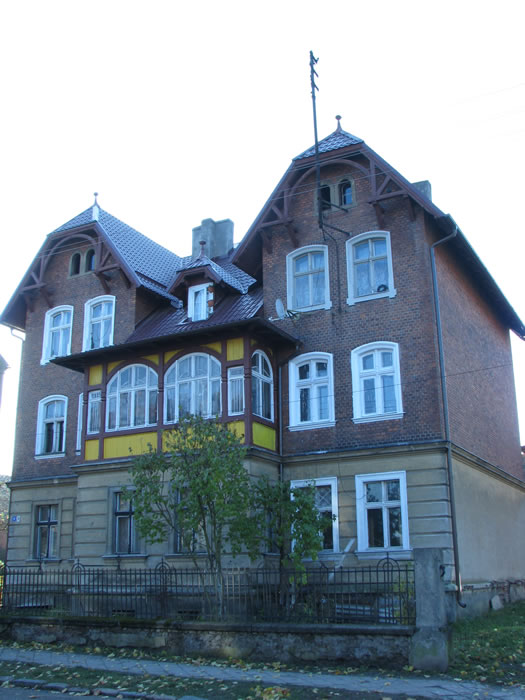 House in F.Dzerzhinskiy st. No. 5
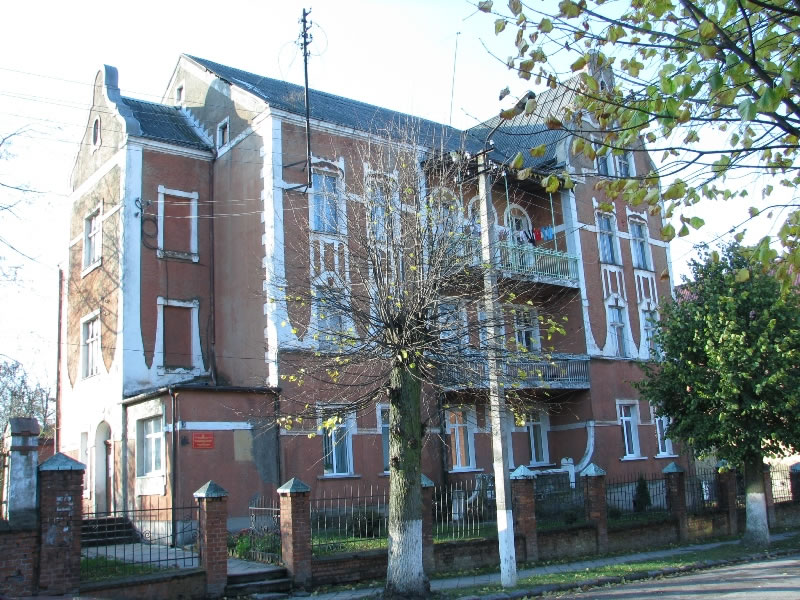 House in F.Dzerzhinskiy st. No. 3
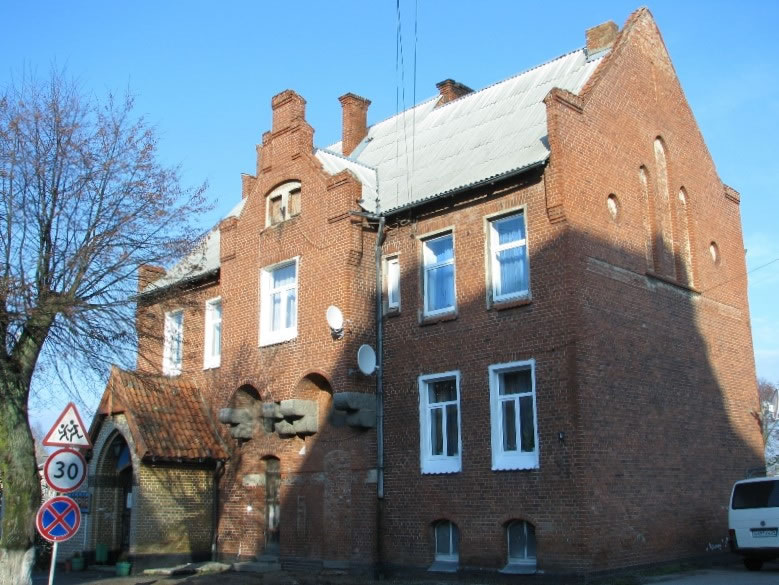 House in F.Dzerzinskiy st. No. 6
Former hotel „Dresden“ complex
(street Moskovskaya)
At the very beginning of the XX century also there were built houses on the current street Moskovskaya. A complex of several semi-detached two-storey houses with attics, known as Dresden Hoff, housed a cinema, a hotel and a restaurant, which belonged to one to the owner of beer and mineral water factories. Now these reconstructed buildings house a youth culture and sports center, a shop, a library, and residential apartments. In 2007 these buildings were also included in the list of cultural heritage sites of local significance.
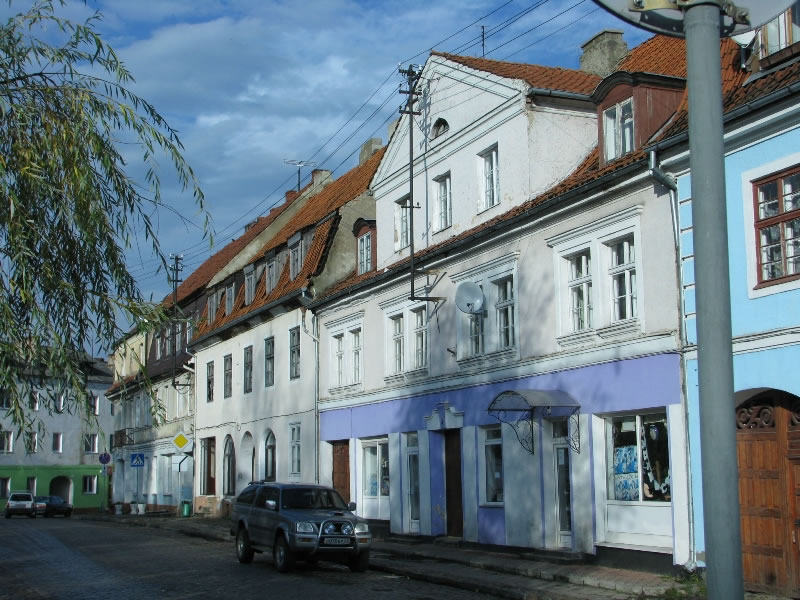
The building of the military barracks complex
(Pogranichnaya st. 23-29, Oziorsk)
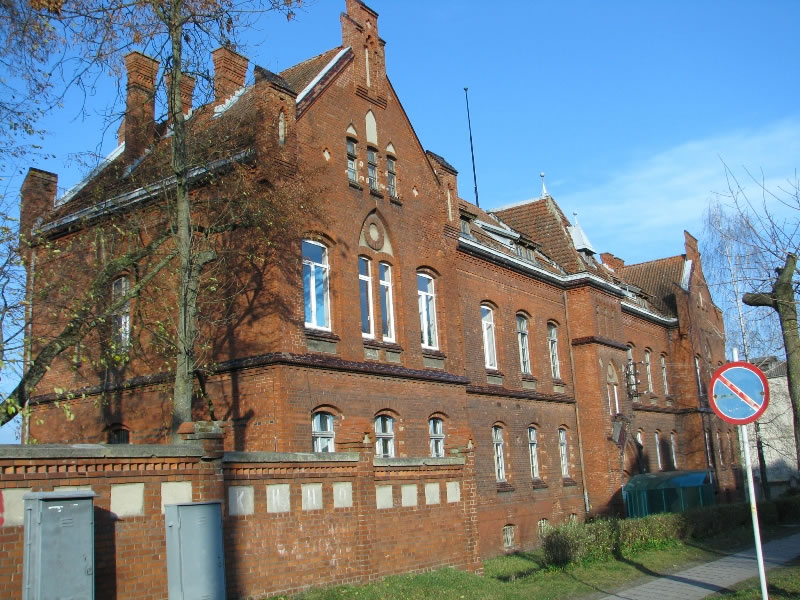
The building of the military barracks complex was completed in 1892. In the complex of three buildings there are three-storey red brick houses. The Darkiemis garrison was located here until the end of the First world war. From 1922 to 1937 some buildings housed a school, administrative premises, and later a military unit. Now the military is no longer here, the building houses the city polyclinic. In 2007, the building was included in the list of cultural heritage objects.
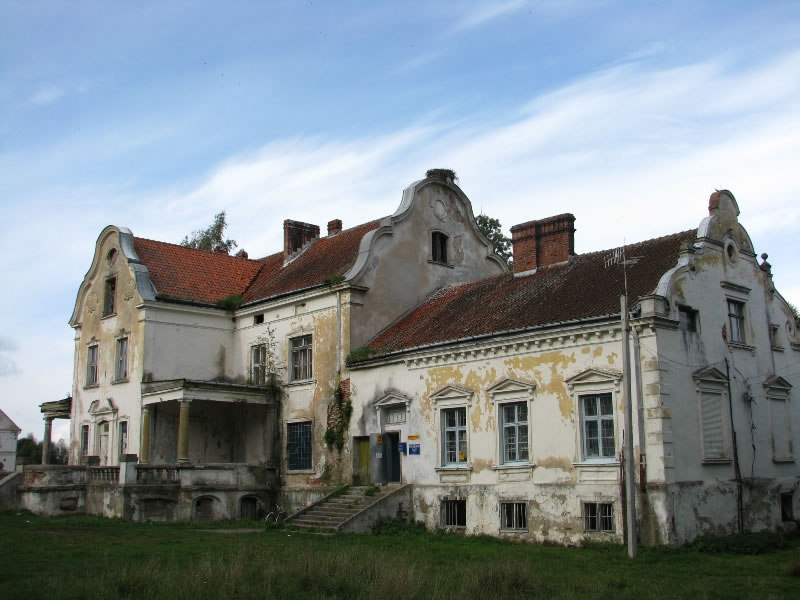
Homestead in Kiautai (Luzhki)
Village Kiautai (Luzhki)
The building of a homestead built in 1776 has survived in the village Kiautai (Luzhki). It was reconstructed in the early XX century and restored again in 1990. Previously, the homestead belonged to the von Zauken family - they were wealthy landowners, including officials and artists in the family. After the Second world war there was a post office here, one company, and now it is private property. The building is currently in a state of emergency.