Cultural heritage objects and areas
Marijampolė municipality
Local lore museum
(Vytauto st.29, Marijampolė)
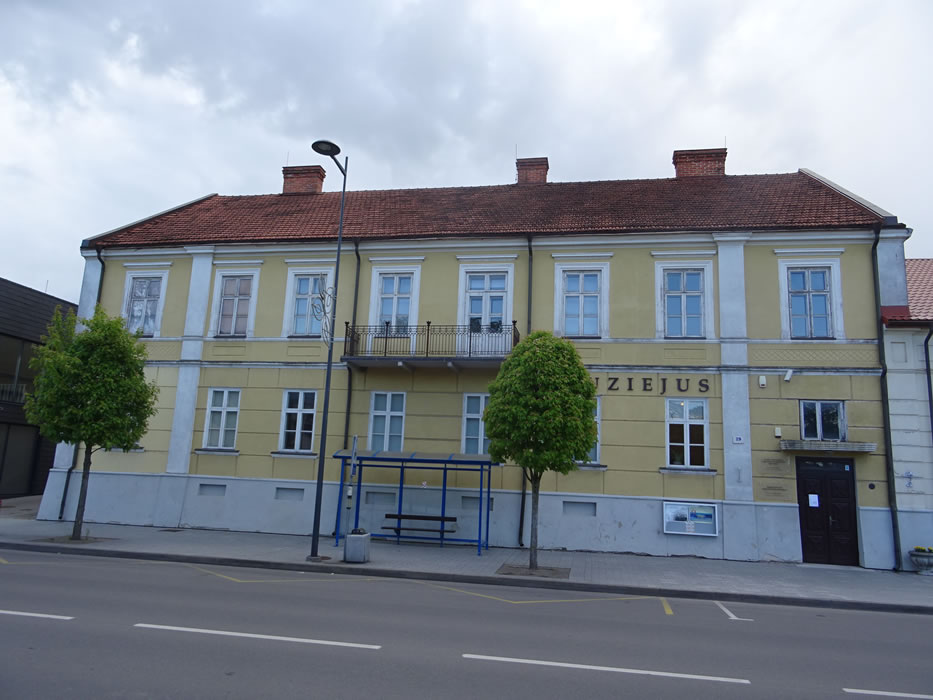
Local lore museum has been located in a house built in the middle of the XIX century on Vytauto street since 1964. It is a one-storey building with an attic and a mezzanine, having maintained its angular structure and volume and configuration since its opening. It as well as the adjoining two-storey house with an attic built at the same time, is from the historicist period with features of neoclassicism. Before the Second world war, the Marijampolė county board was located in the house where the Local Lore museum, established in 1933, now operates. Now it is the museum of Marijampolė region and President Kazys Grinius.
The museum of the President of Lithuania K.Grinius
(Bažnyčios st.23, Marijampolė)
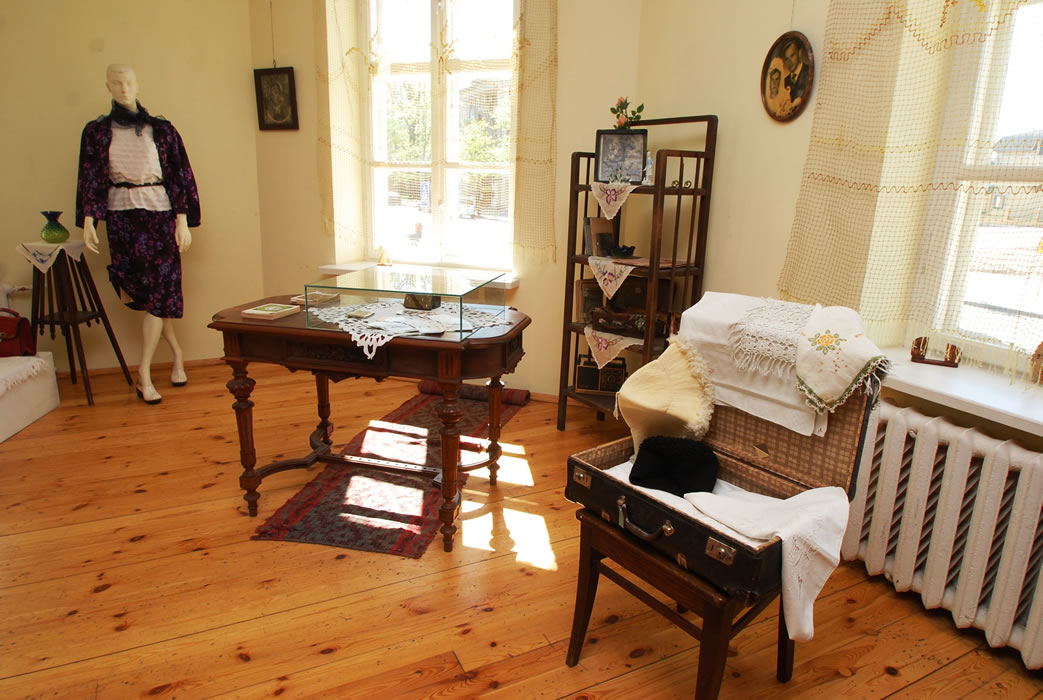
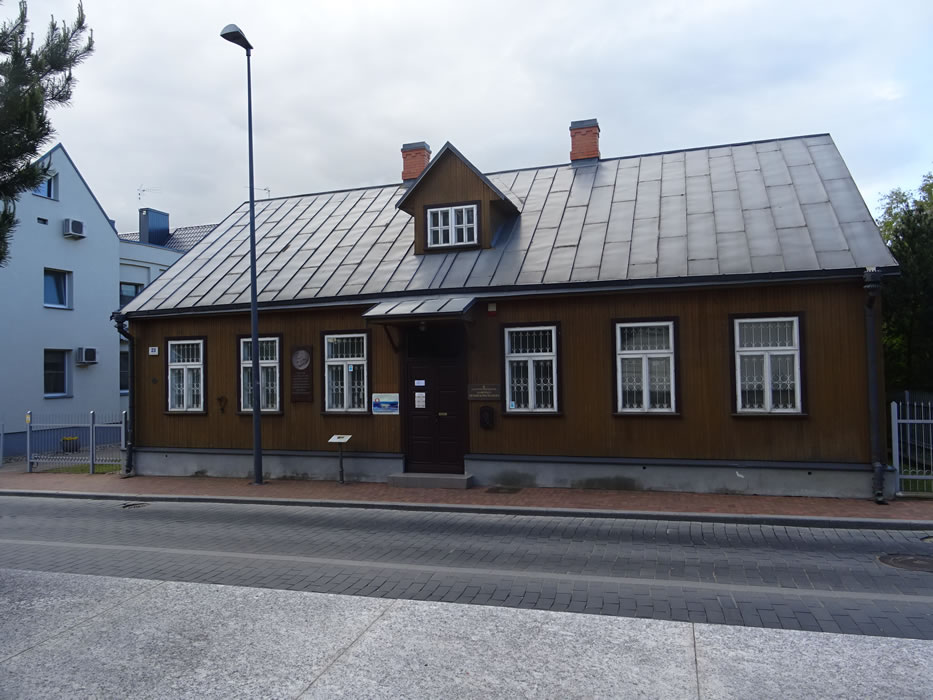
The building was called "Griniai house" and in 1905 the first Lithuanian evening in Sūduva was held, during which the comedy "America in the bathhouse" was performed. At the beginning of the XX century, the center of the Sūduva cultural movement was located here, public meetings were held and the Society „Šviesa“ was established. Later, several families lived in the house, and at the end of 1997, after the reconstruction of the house, the memorial museum of President K. Grinius was opened and an exposition of the Vilkaviškis diocese museum was installed. Now this museum is part of the Marijampolė region and President Kazys Grinius museum.
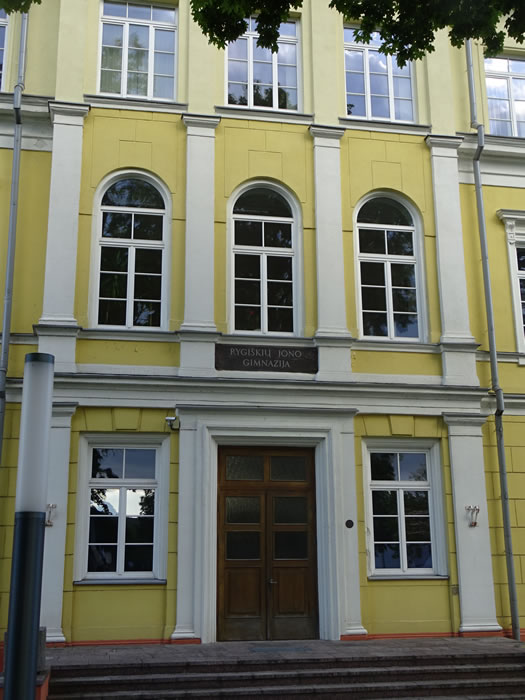
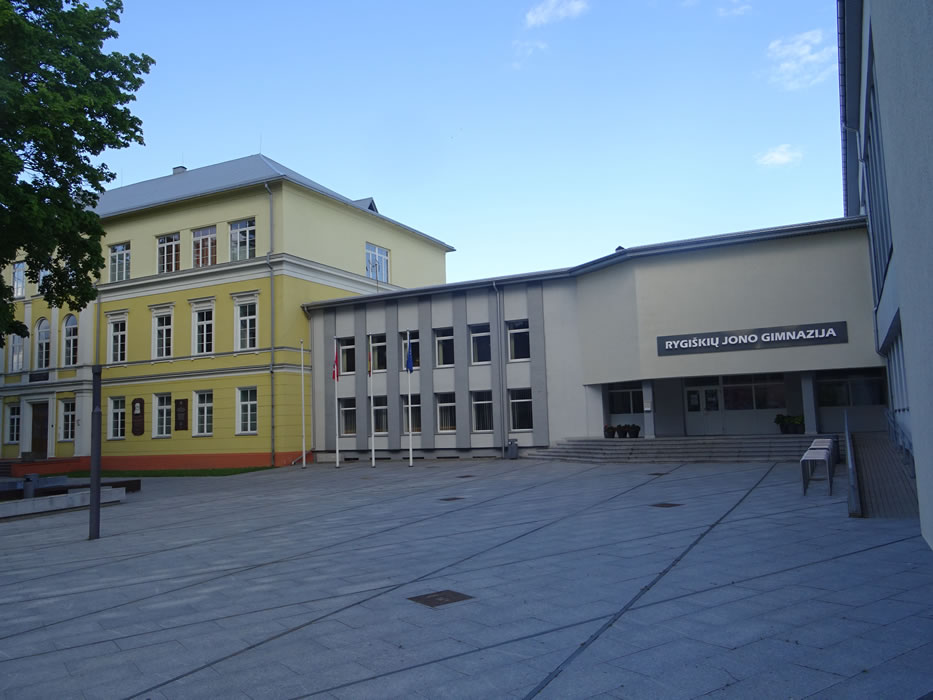
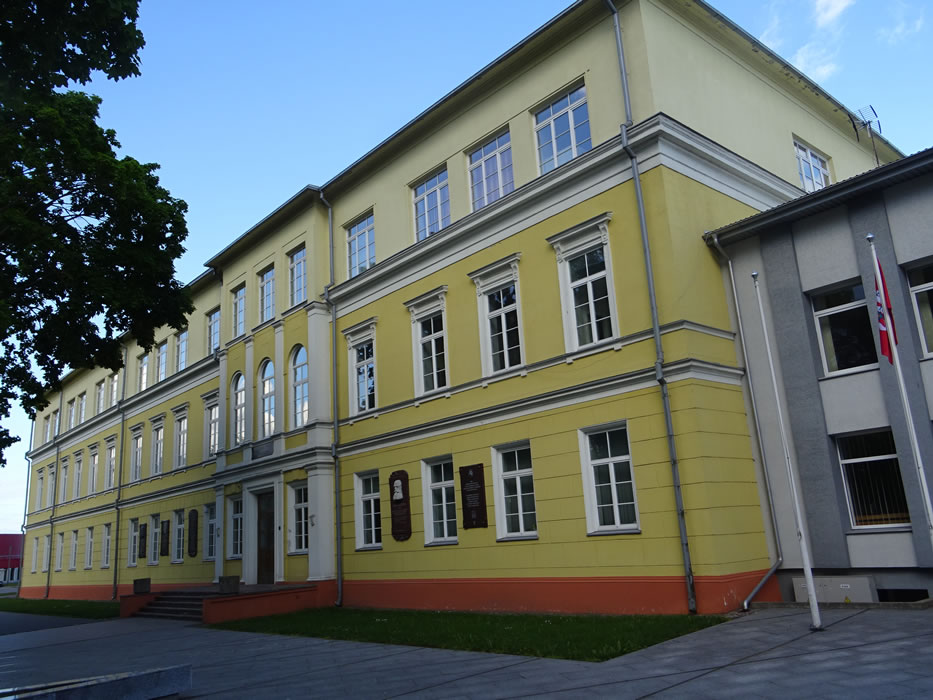
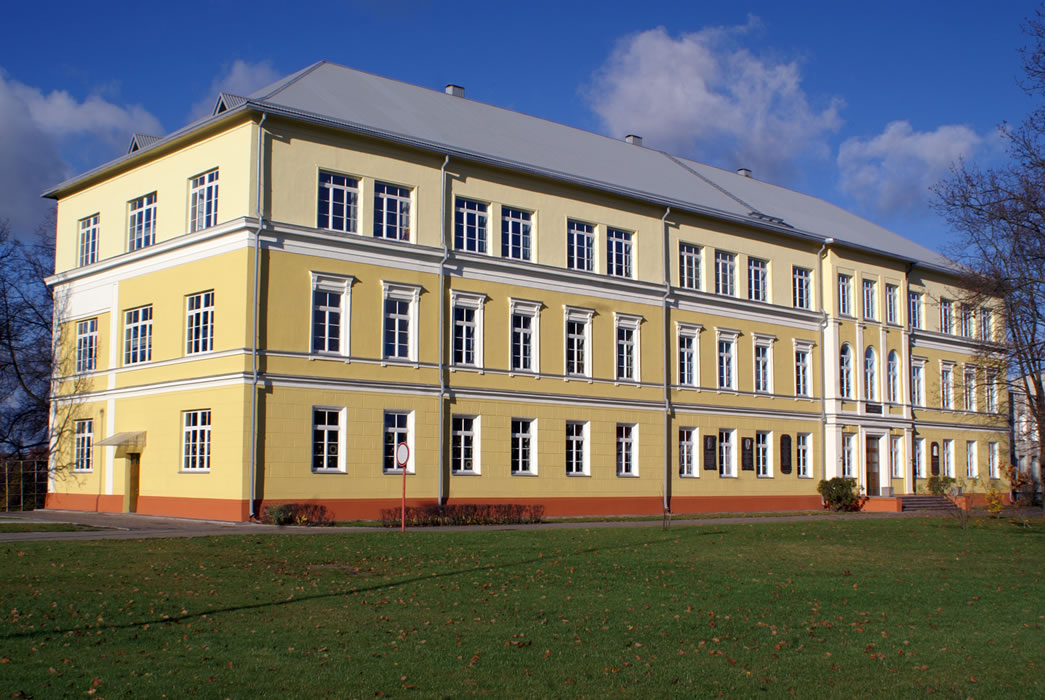
Rygiškių Jonas gymnasium
(Kauno st.7, Marijampolė)
Rygiškių Jonas gymnasium is the cradle of the national revival of the whole Lithuania. The building of forms of classicism began to operate in 1867 in order to distract the young inhabitants of the country from Polish influence. The gymnasium had Lithuanian language lessons from the very beginning, and it soon became a centre of national revival. In 1920, the school was given the name of Rygiškių Jonas - the pseudonym was mostly used by linguist Jonas Jablonskis. Six signatories of the Act of February 16, 1918 studied at the gymnasium, its students were Jonas Jablonskis, Vincas Kudirka, Kazys Grinius, Pranas Mašiotas, Petras Klimas, Pranas Vaičaitis, Petras Kriaučiūnas, Matas Šalčius, many other scientists, artists and writers of the country. In 1992, a monument of sculptor Petras Aleksandravičius to J.Jablonskis was unveiled at the gymnasium.
Former teachers' seminary
(Vytauto st.47, Marijampolė)
The seminary was established in a beautiful place by the Jevonis stream in 1919 and trained teachers for primary schools. Initially, it operated in the building of the former club of officers of the Tsarist Russian Army, but already in 1925 it moved to a specially built seminary of neoclassical forms. Soon a large park and garden were planted nearby, and flower beds appear. A former primary school is set up in the former officers’ club, where seminarians do internships. In 1936 during the transformation of the education system, the seminary was closed, reopened two years later, but before the occupation of Lithuania it managed to publish only one, the 14th edition. After the war it continued to operate, in 1952 became a pedagogical school, and currently - Marijampolė art school is located here.
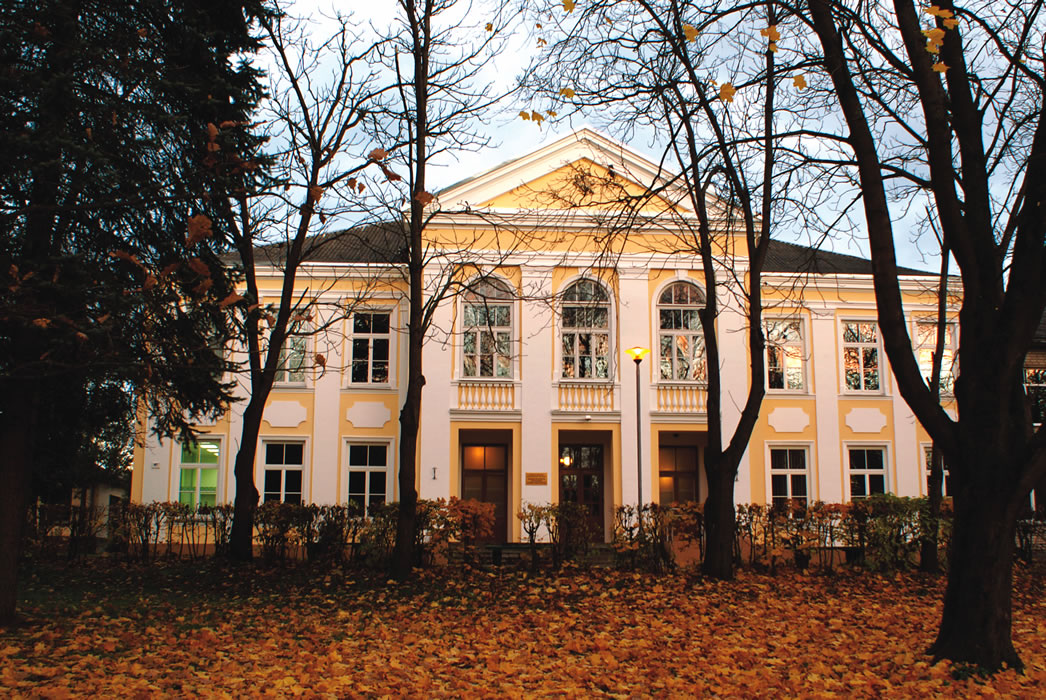
Former Kvietiškis manor complex
(P.Armino st.92, Marijampolė)
Former Kvietiškis manor complex founded in 1717 by count Morkus Antanas Butleris. The complex consisted of a wooden manor house, 3 pavements, 2 barns, 3 barns, a brewery, a carriage, water and windmills, a brick house. In 1807 marshal of Napoleon's army Michel Ney stayed here. In 1831, a battle took place in the manor fields between the Lithuanian peasants and the tsar's army. In the XIX century the owners of the manor changed several times. In 1921 the convent of Marijampolė St. Sisters of the Immaculate Conception of the Virgin Mary established a lower agricultural school in the palace and renovated the park. In 1922, the land of the manor was divided into plots, expanding the territory of the city and allocating land to volunteers. Later, the Higher School of Agriculture operated here, and now Marijampolė college is located in the manor house.
Railway station building
(Stoties st.2, Marijampolė)
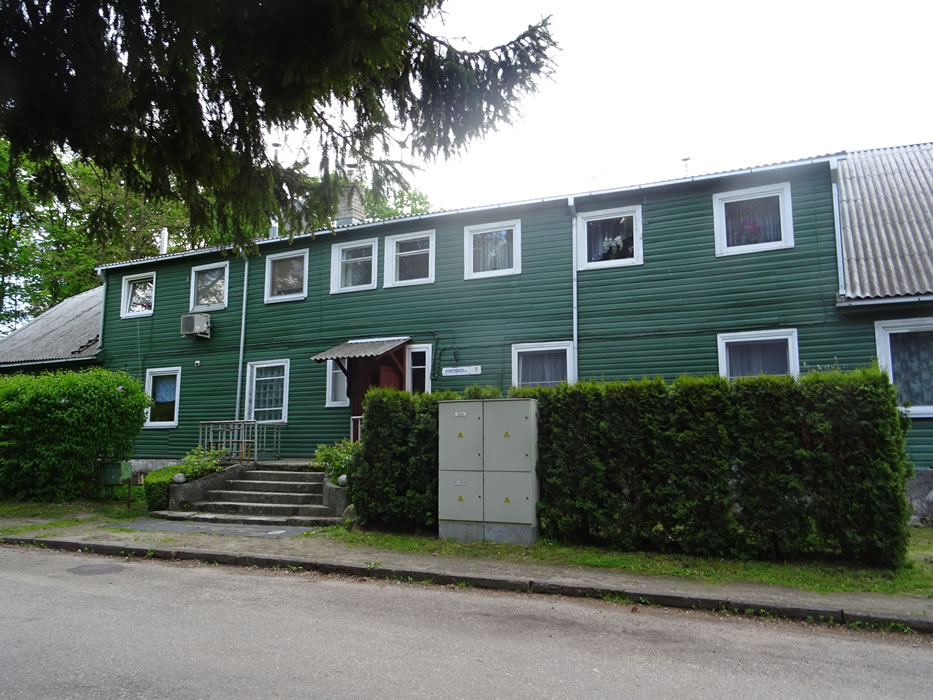
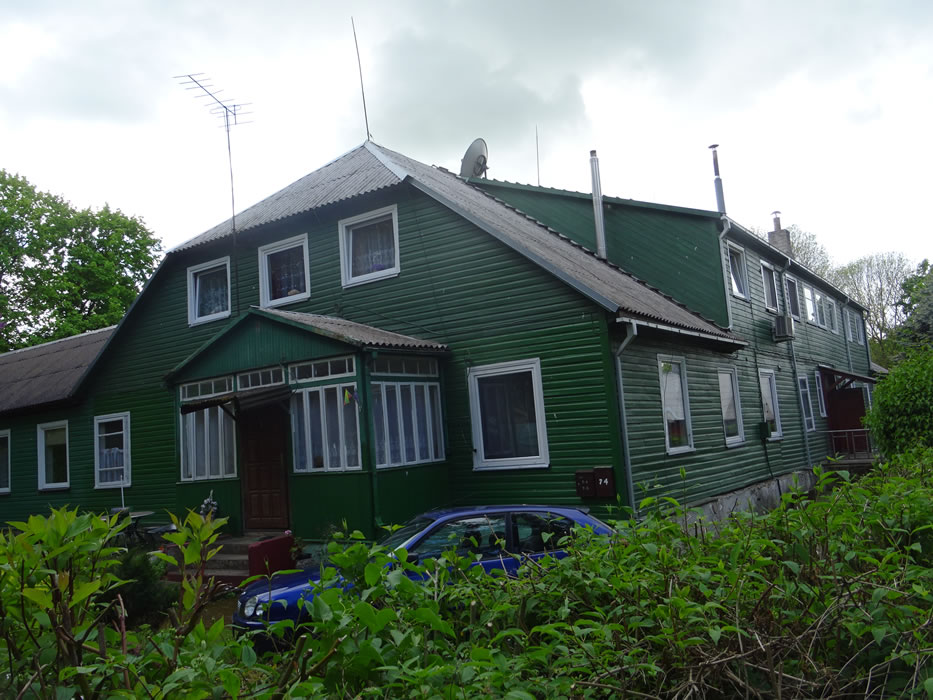
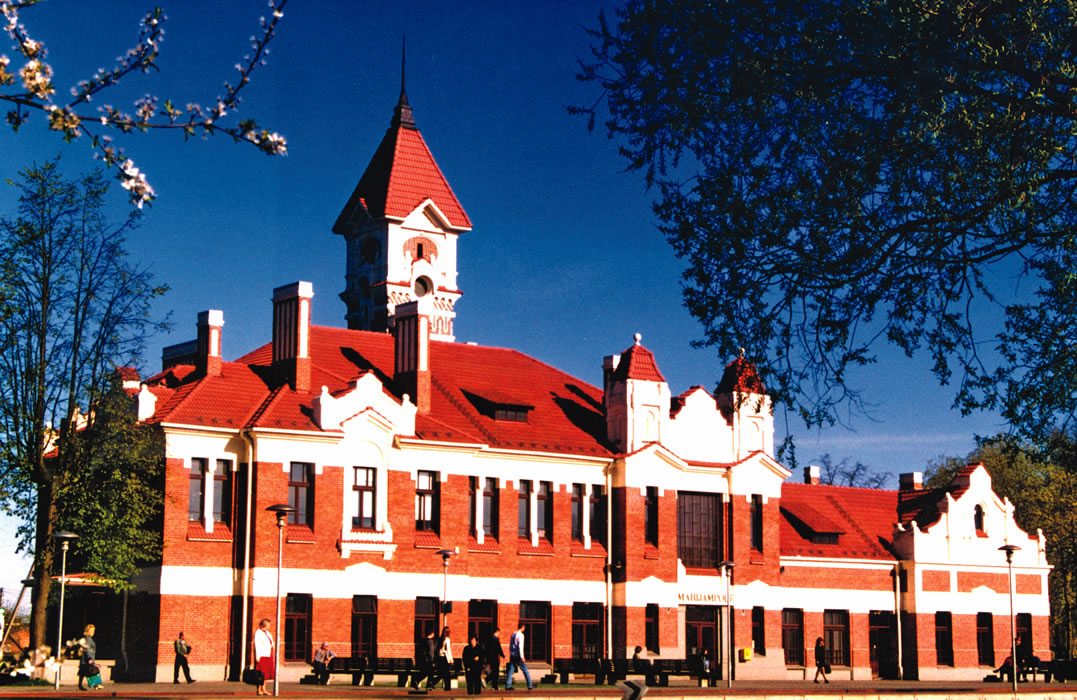
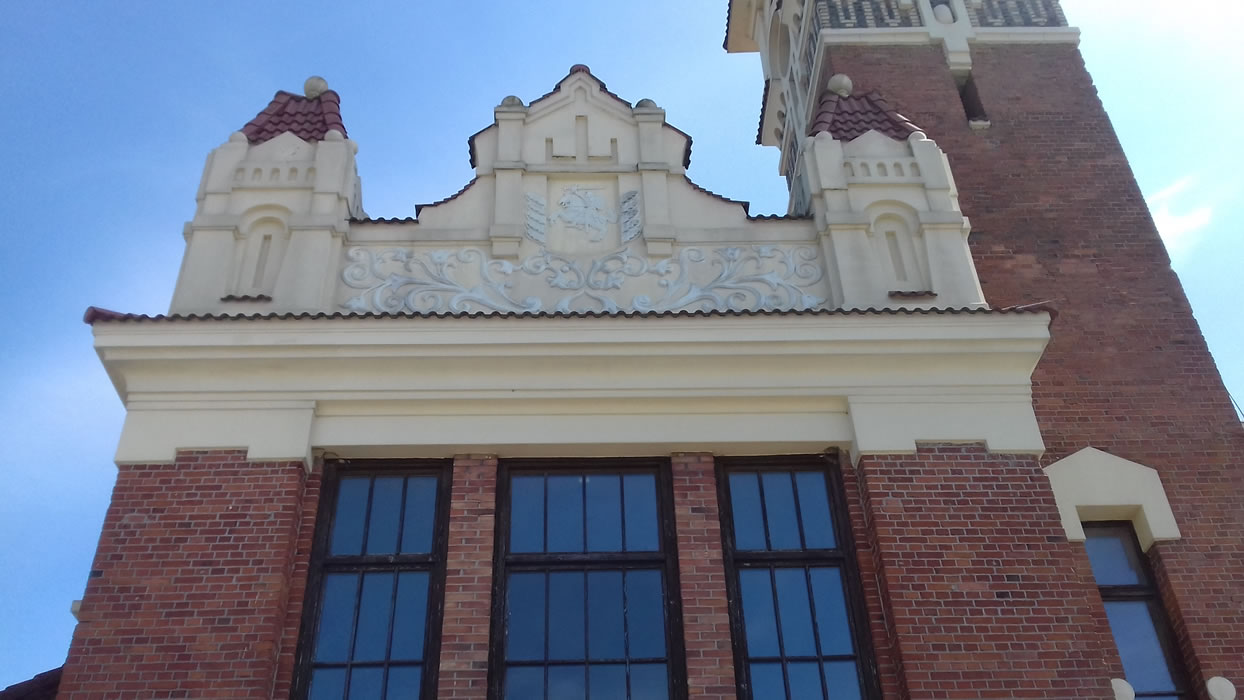
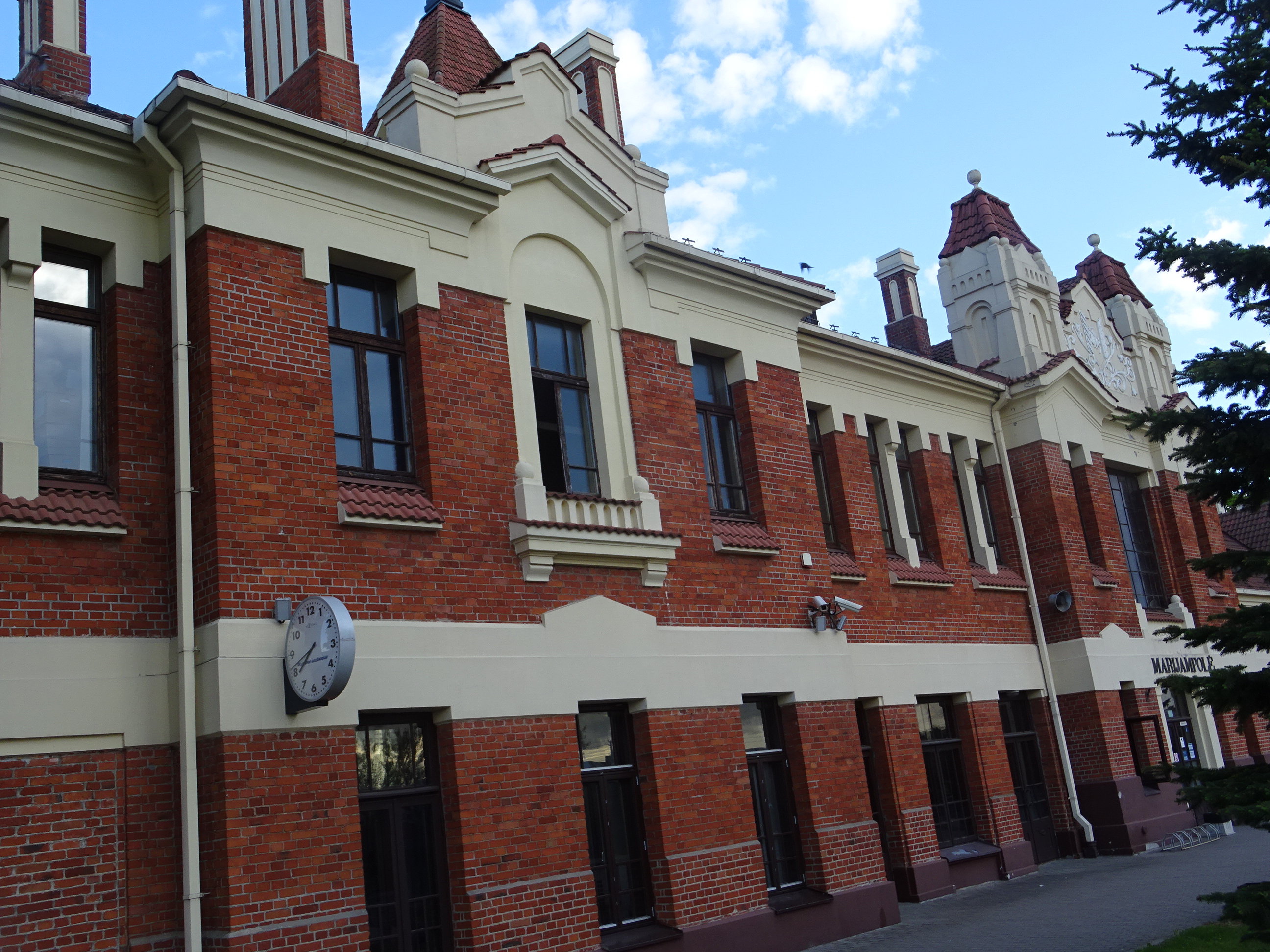
Railway station building - irregular shapes, asymmetrical compositions are typical to the modernism. The station was built in 1923-1924 according to the design of engineer Edmundas Frykas. The building is two-storey, with a water supply tower in the center and adjoining one-storey administration and trunk buildings. In 1994-1997, the facade, roof, ceiling and interior restoration works of the building took place. In the course of these works, the decorative elements of the pediment as designed by E. Frykas in 1923 were implemented.
Marijampolė Small Basilica
(Bažnyčios st.3, Marijampolė)
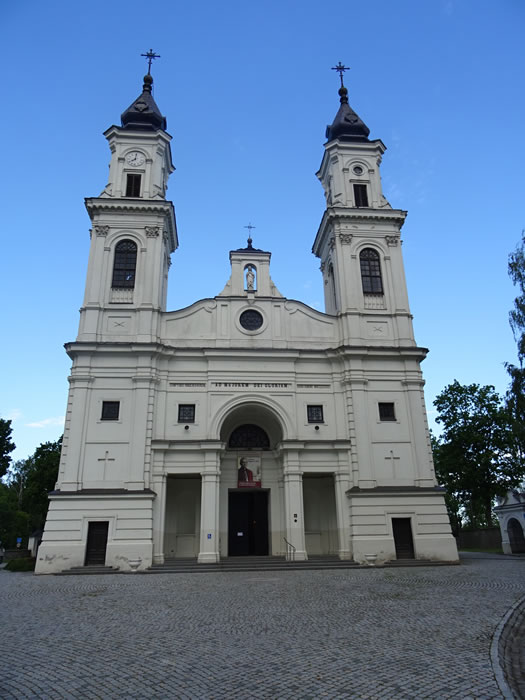
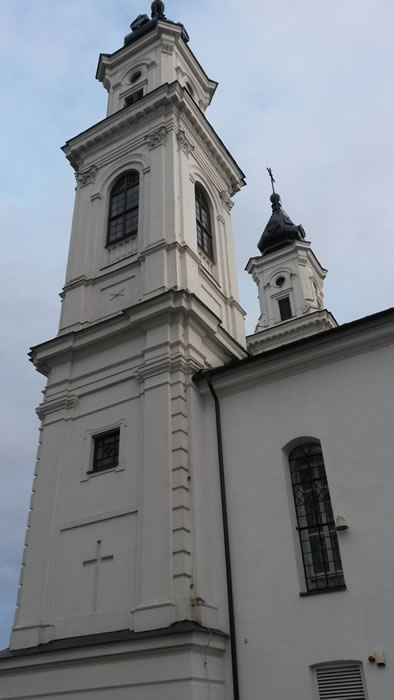
A classicist, neo-baroque, two-tower, three-story church. Construction began in 1819 and was opened in 1824. It later gradually expanded and acquired its current forms in 1914. It has 6 altars of work by local masters, church clothes and paintings (from the XVIII century) are stored here - a total of 13 art values are included in the list of art values of local significance. In 1934, the remains of Blessed Bishop Jurgis Matulaitis (1871-1927) were buried in the Chapel of the Heart of Jesus. After the demolition of Vilkaviškis Cathedral after the Second World War, this church was the diocesan procathedral in 1944-1949 and 1989-1998. In 1992, it was awarded the title of Small Basilica.
Marians monastery
(J.Bendoriaus st.3, Marijampolė)
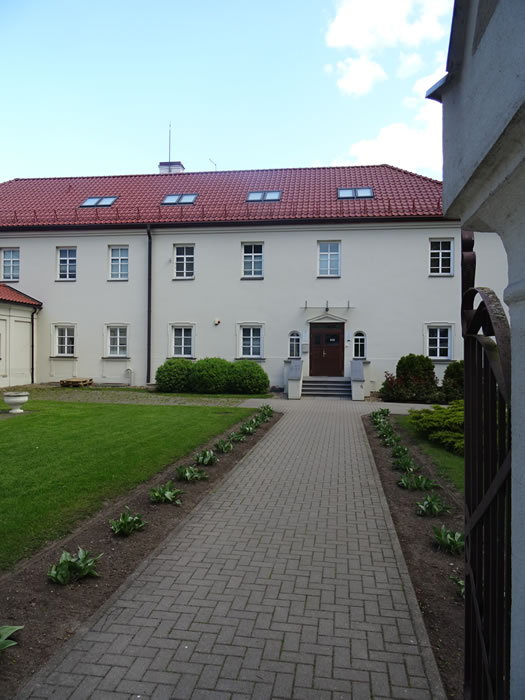
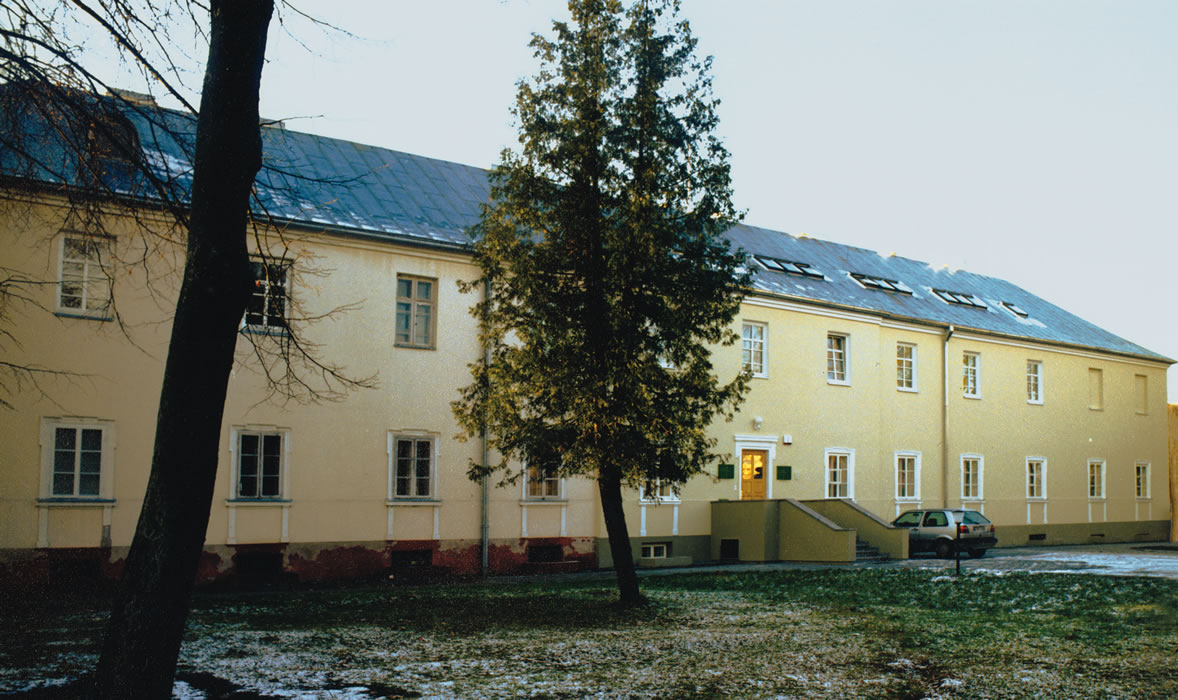
Marians monastery was built in 1791-1792. It is a building of classicist forms, rectangular plan. The monastery of St. George's province of St. Mary's Congregation of Lithuania was located here until 1904, later closed. After the death of the last monk of the Marian Order in Lithuania, pastor Vincentas Senkus, the activities of the Marians ceased altogether for several years. It was revived by the Blessed bishop Jurgis Matulaitis, and in 1917 the monastery building was returned to the Marians, who were active in the city. After the Second World War, the Marians had to leave the city, the Red army settled in the monastery, and later educational institutions operated here. The building was returned to the Marians in 1991, and now the convent is home to several Marian monks.
Marians gymnasium
(J.Bendoriaus st.11, Marijampolė)
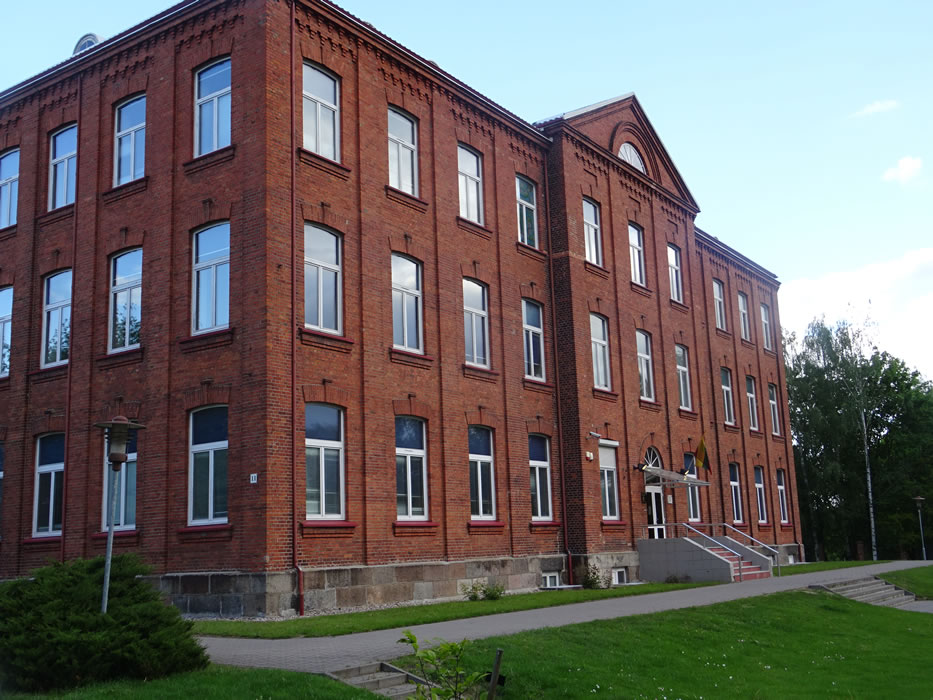
In 1921, the Lithuanian Ministry of Education allowed the Marian Congregation to establish a private higher school in Marijampolė. In the territory of the Marian monastery, a three-storey juvenate was built in 1923 - a gymnasium with a dormitory. Boys were admitted to the gymnasium from the age of 12, and before the occupation of Lithuania, there were 12 school graduate groups. In 1940 the gymnasium was closed. At the initiative of the Marian priests, it was revived in 1997, and in the old building renovated in 2000 the Marian High School was opened, which was granted the status of a gymnasium in 2008.
Evangelical lutheran church
(Kauno st.9, Marijampolė)
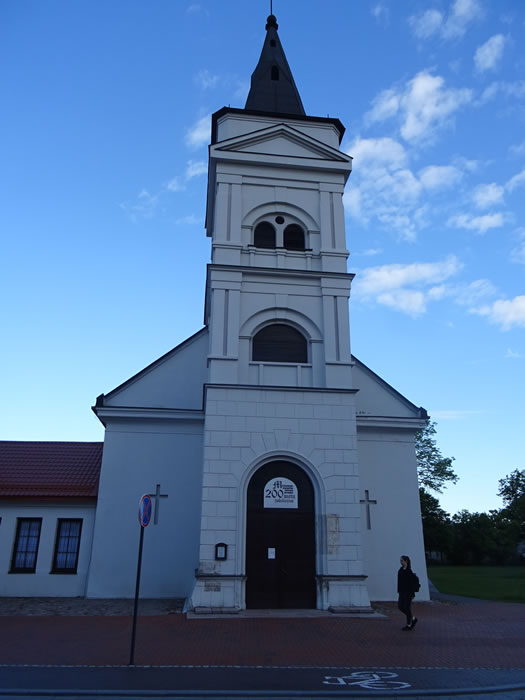
The evangelicals of Marijampolė submitted a request to the government commission in 1819 to establish a parish and build a church. Initially, they used the warehouse premises for the house of prayer, and the construction of the one-nave brick church began in 1835, and its installation work was completed in 1841. In the same year, an Evangelical Lutheran school opened next to the church, and a tower was soon built. At the beginning of Second world war, the church was closed, and when a shell hit the tower, it was destroyed. The church property was nationalized, it was turned into a grain warehouse, later into a gym, next to which a swimming pool was built. The building was returned to the Evangelical Lutheran parish in 1992, and its restoration work continued until 1995.
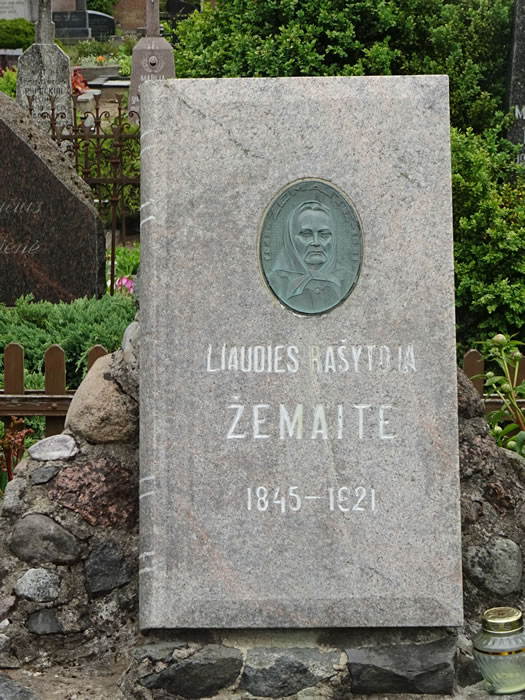
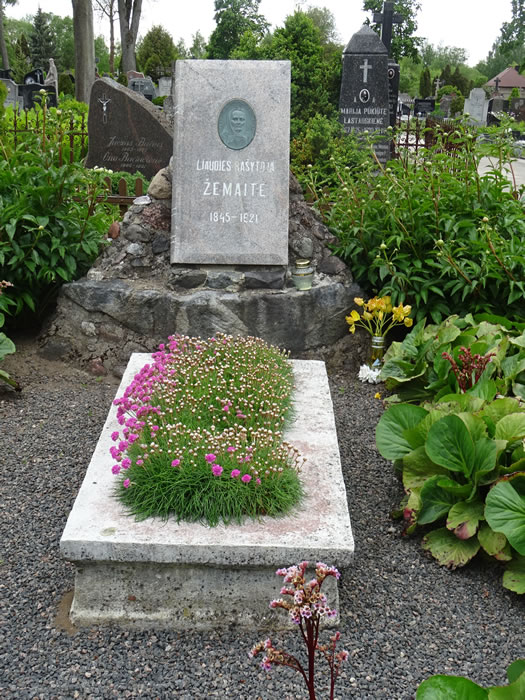
Tomb of writer Julija Žymantienė-Žemaitė in the old Marijampolė cemetery
(P.Armino st. 38A, Marijampolė)
A classic of Lithuanian literature, returning from America in 1921, where she collected donations for the victims of the First world war, settled in the house of lawyer Andrius Bulota and his wife Aleksandra in Marijampolė. There she died in December 1921 and was buried in the old Marijampolė cemetery. The monument to Žemaitė was created in the Marijampolė cemetery by the famous sculptor Petras Rimša from Vilkaviškis region. The grave of the writer is constantly supervised by the community of R. Stankevičius progymnasium.
St. Vincent Paul Church
(Vytauto st.31, Marijampolė)
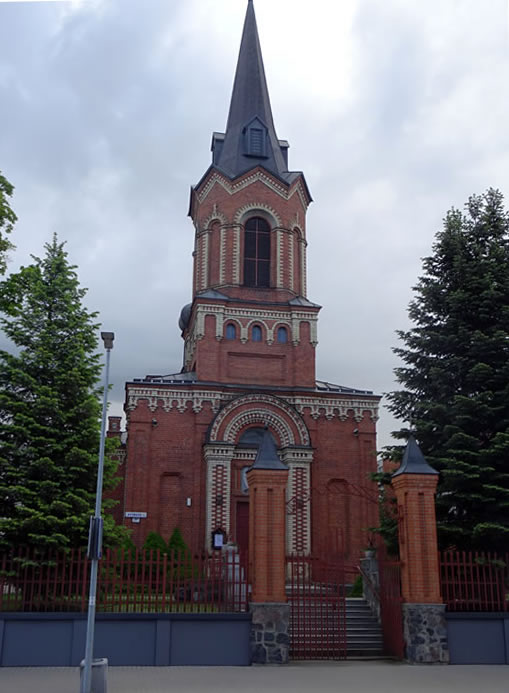
St. Vincent Paul Church was built in 1888 as an Orthodox church for Russian soldiers and was dedicated to Tsar Alexander III. It is a neo-Byzantine, eclectic, single-tower and one-nave church with outbuildings and seven towers. After the First World War, the bishop of Seiny handed over the church to the Marian monks, who converted it into a church. This soon became the Lithuanian army church, and in the 1940s a parish was established next to it. After World War II, the church was closed and turned into a warehouse. Its activities in St. Vincent Paul Church was renovated in 1990, and until 1999 its restoration and landscaping works were underway. In 2000, the sculpture "Pieta" by the sculptor Julius Narušis was erected in the churchyard.
Former Jewish Synagogue
(P.Butlerienės st.3, Marijampolė)
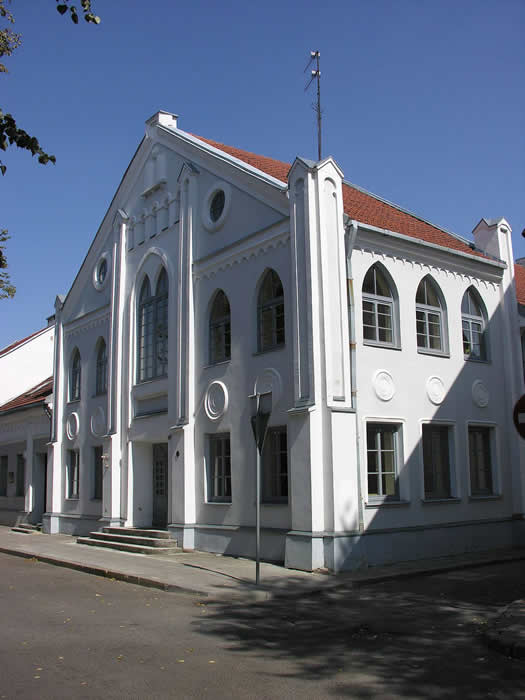
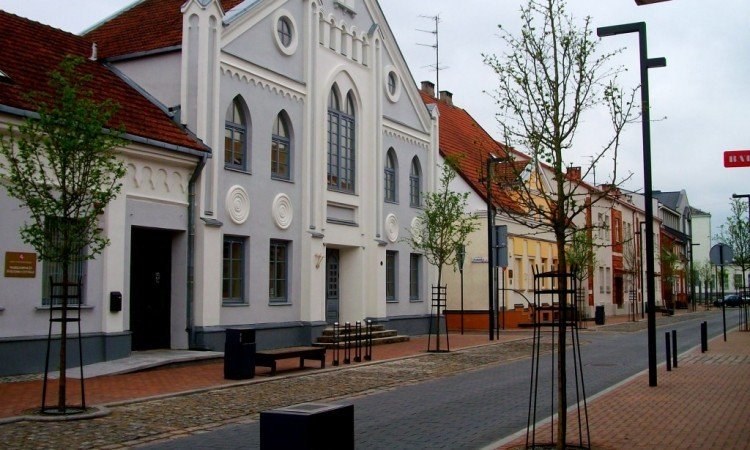
It is an eclectic, historicist building erected in the city center in 1870. The synagogue was brick, plastered, with a gabled roof, of discontinuous volume, with abundant decorative elements. Among them are prominent stucco rosettes, a row of arched niches in the main façade, as well as a symbolic Torah motif embedded in the pediment niche. After the destruction of the Jewish community at the beginning of the Second World War, the synagogue was soon turned into a warehouse for secondary raw materials with ceilings and windows. In 1985, the building was reconstructed and adapted for the Marijampolė engineers' house, and a decade later, the Marijampolė county Education center, established together with Danish teachers started operating here. The Beatričė Kleizaitė-Vasaris art gallery now also operates here.
Marijampolė barracks
(Vytauto st.72, Marijampolė)
Marijampolė barracks - the first buildings near Šešupė appeared in 1880, and within a decade a bakery, a sauna, garages, warehouses, a chancellery and many other single-storey buildings appeared in the barracks. The third Don infantry and the ninth Jelizavetgrad dragoon regiments were stationed here. During the First world war, in 1915, soldiers of the German empire stayed in the barracks, and in 1919, the barracks were transferred to the Lithuanian army. The Infantry regiment of the Grand Duke of Lithuania (GDL) Vytenis was brought here in 1923. During the Soviet years, the paratrooper regiment of the Seventh airborne division was stationed here, and the Lithuanian army returned to the destroyed buildings at the end of 1992. Now the GDL Vytenis general support logistics battalion is deployed here. Several examples of interwar Lithuanian wall paintings have survived in the barracks - the only ones in Užnemunė, and the former horse manege of almost 2000 square meters from the end of the XIX century without any supports or partitions and with original wooden roof constructions is the only one in Lithuania.
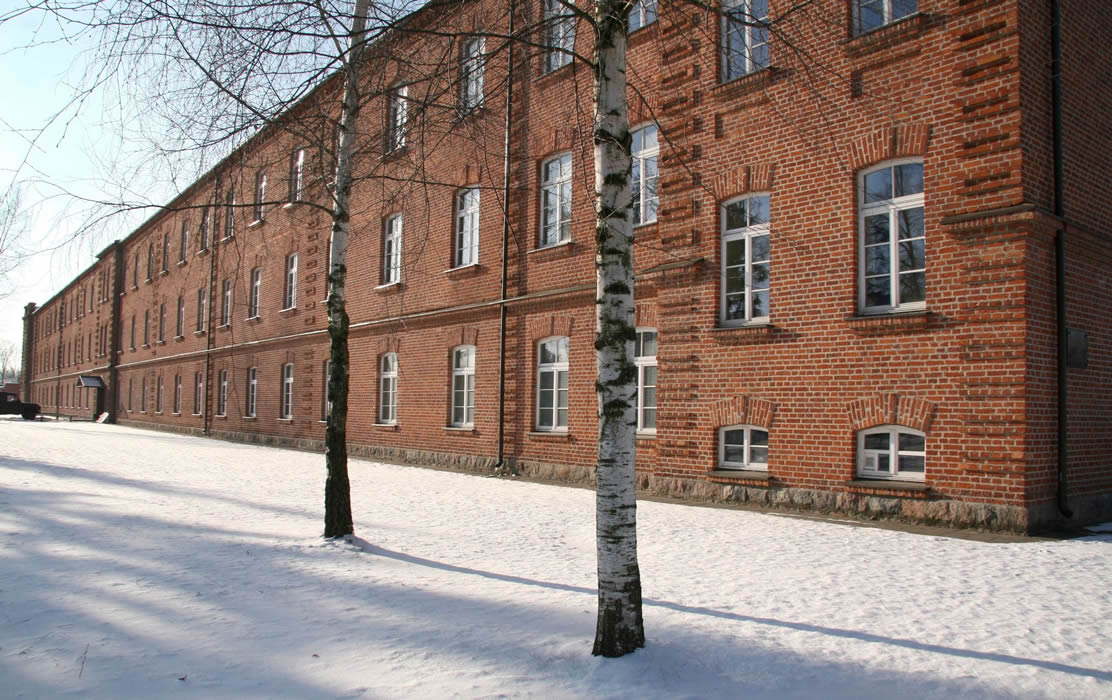
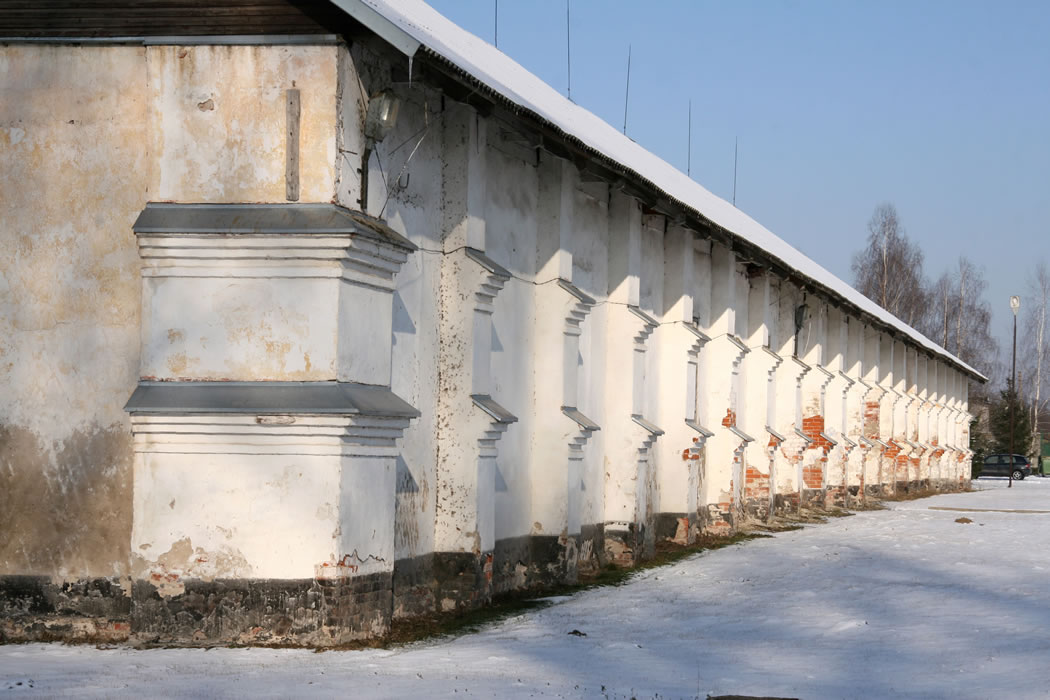 Former horse manage building
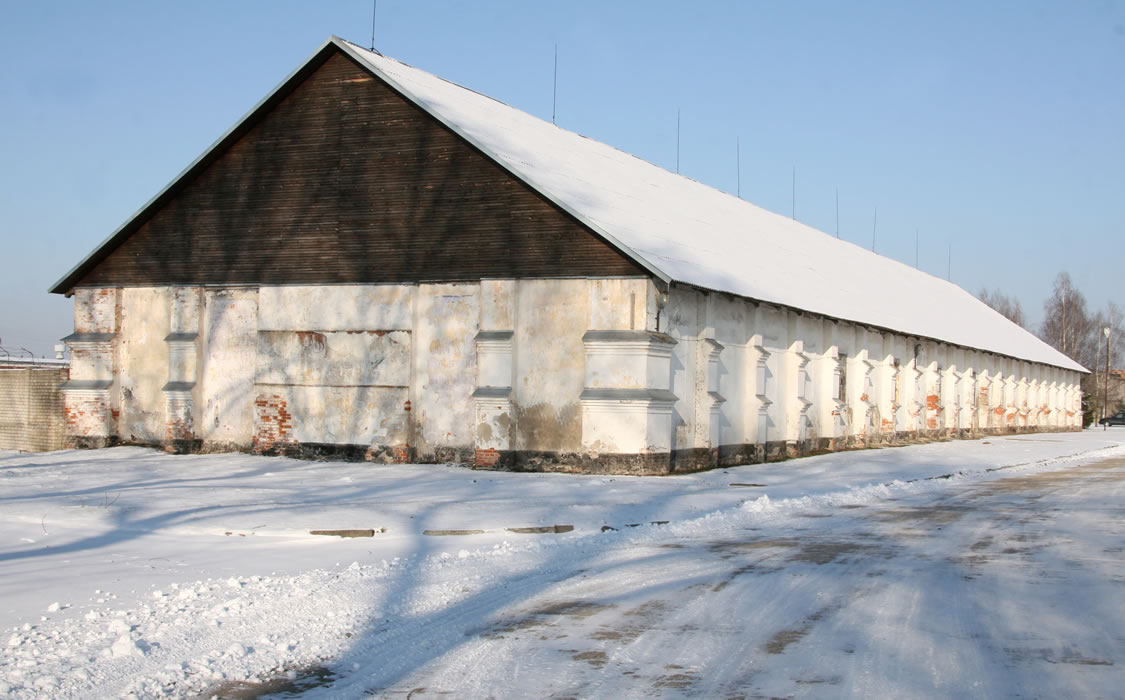 Former horse manage building
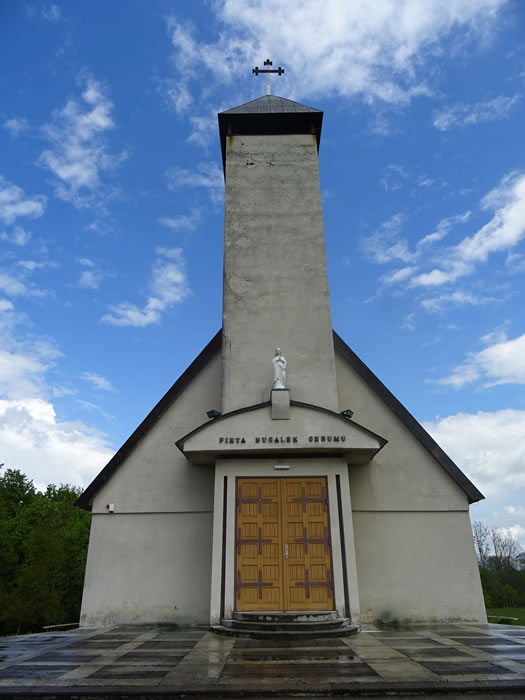
Birthplace of Blessed Jurgis Matulaitis in Lūginė village
J. Matulaitis was born in 1871 in a family of farmers in the village located in Šunskai eldership. The remains of bishop J. Matulaitis, who was revived of the Marian monastery and proclaimed Blessed by Pope John Paul II in 1987, have been resting in the Marijampolė church since 1934. A chapel was built in 1991 in the village of Lūginė, the birthplace of the blessed, according to the project of the architect Zigmas Brazauskas. The vertical accent of the chapel tower marks the place of childhood and youth of the blessed. Many prayers gather here in July, when J. Matulaitis' birthday is celebrated, pilgrims from other countries also come.