Cultural heritage objects and areas
Kazlų Rūda municipality
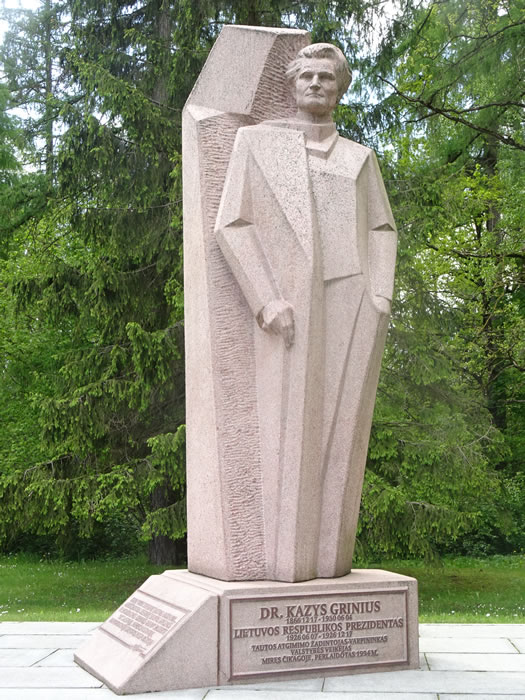
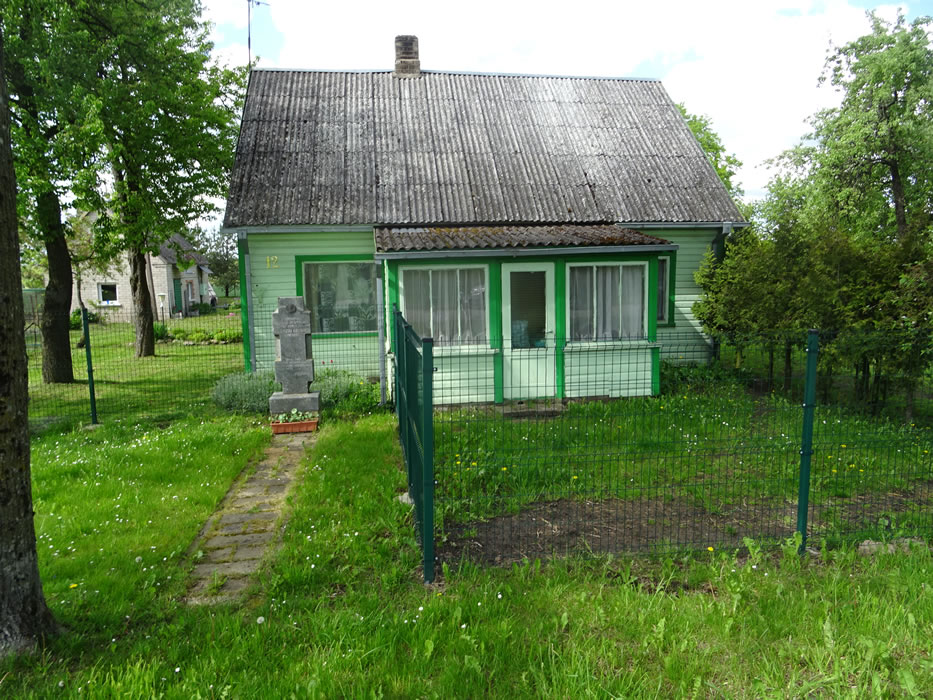
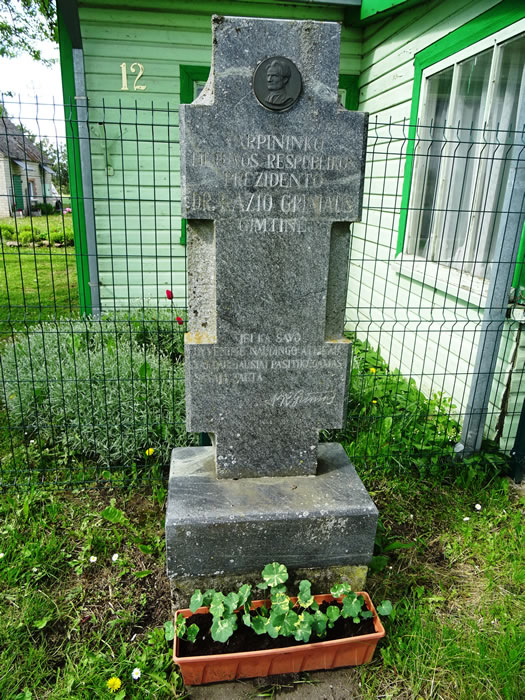
The monument of the president of Lithuania Kazys Grinius
(Selema village, Kazlų Rūda municipality)
The monument of the president of Lithuania Kazys Grinius was unveiled in 1994 in the Mondžgirė grove in Mikalavas forest, by the road Marijampolė - Kaunas. An urn with the remains of the president was bricked into the foundation of a monument, made of pink granite by the sculptor Kęstutis Balčiūnas from Marijampolė. That was the last will of the president, who‘s remains flown back from the Lithuanian St. Casimir's cemetery in Chicago to Lithuania. Not far from this place is the village of Selema Būda, where the future president was born. Here is his native homestead, which is declared a state-protected monument. It has a wooden dwelling house, an outdoor kitchen, a barn, a cloister, a barn, as well as a garden. A monumental stone was built next to the residential house.
Kazlų Rūda church
(Gedimino st.2, Kazlų Rūda)
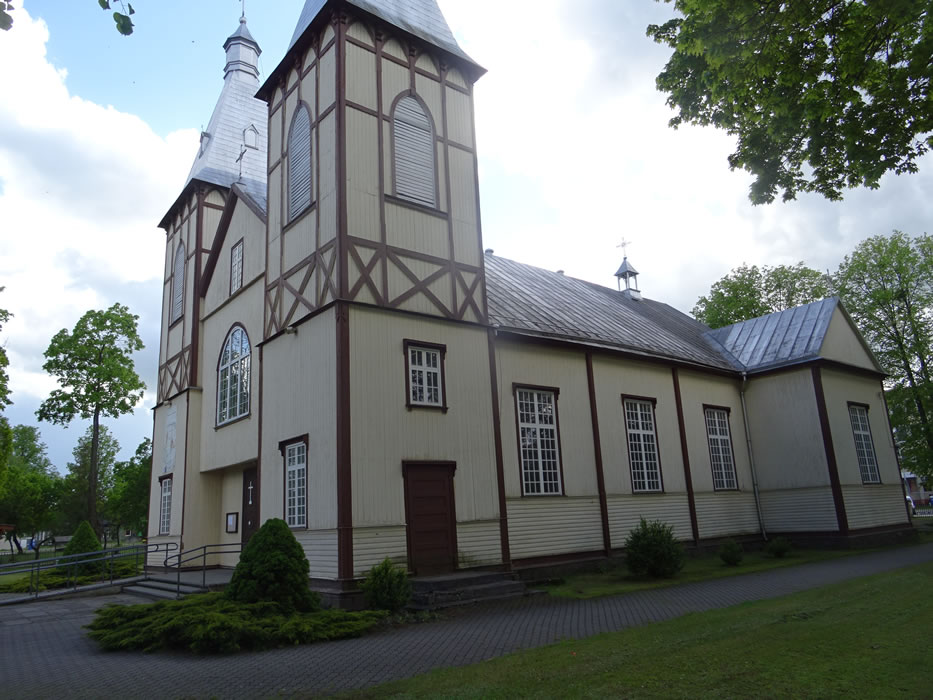
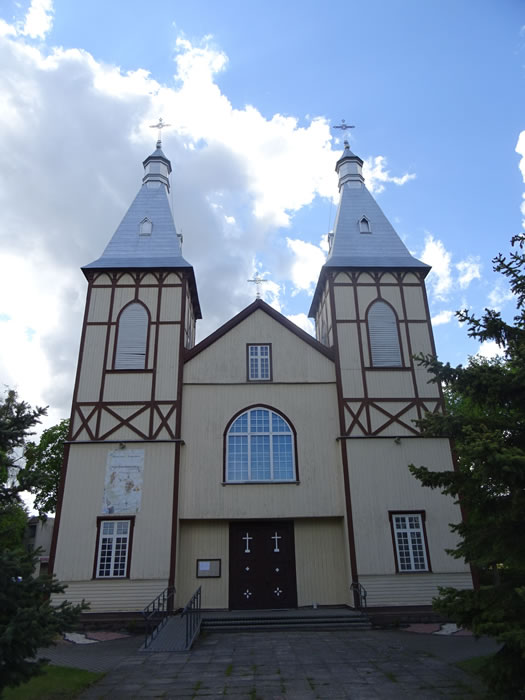
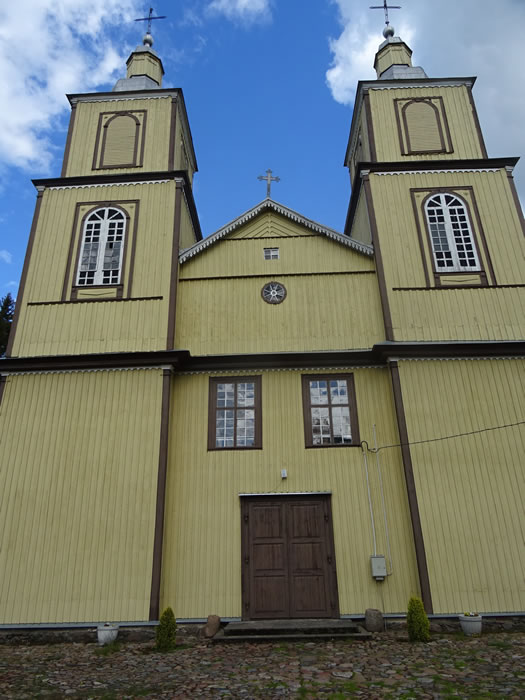
The construction of Kazlų Rūda church was started in 1924 according to the project of engineer Stasys Kimonas and a year later it was consecrated and the first Mass was offered here. Three naves wooden church of the St. Heart of Jesus is composed according to the usual scheme of a two-tower sacral building, its main part is rectangular, and at the presbytery are the buildings of the side chapels.
Višakis Rūda St. bishop Stanislavas church
(Bažnyčios st.8, Višakio Rūda, Kazlų Rūda municipality)
Višakis Rūda St. bishop Stanislavas church was started to built in 1883 near a wooden chapel dates back to 1817, which was later demolished. The new church was consecrated in 1887. It is a pseudo-baroque style, rectangular plan volumetric church with two towers. About a kilometre from the church is the well-known source of Višakis Rūda, the history of which is unknown. The spring complex consists of two chapels - one at the top, on a hill, which was built using the logs of the old town chapel, and the other - on a hill, next to the spring itself, whose water has healing properties. In 1927 a new tower was built above the spring, and a new sculpture of St. Virgin Mary. People's stories tell us that the source is in the place, where the Virgin Mary appeared.
Antanavas chapel
(Bagotosios st.10, Antanavas, Kazlų Rūda municipality)
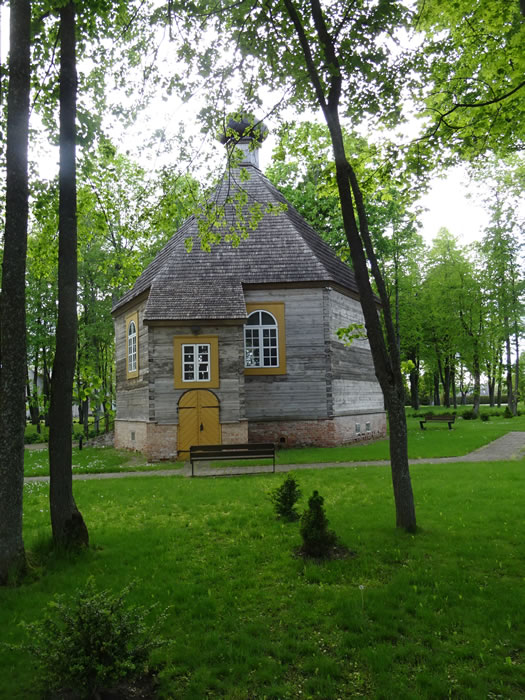
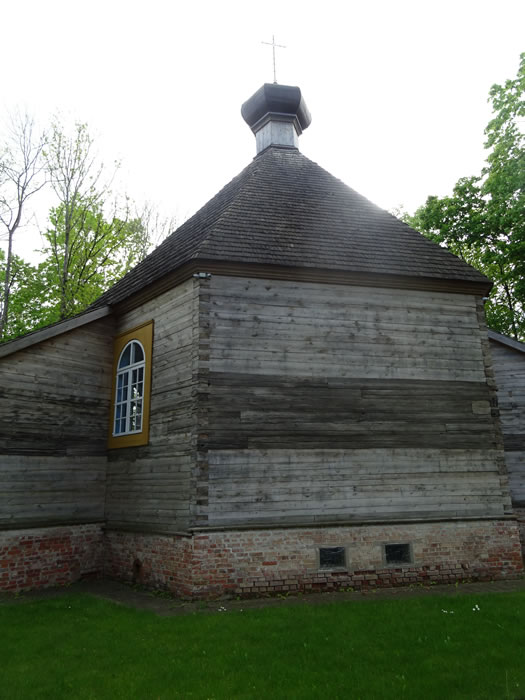
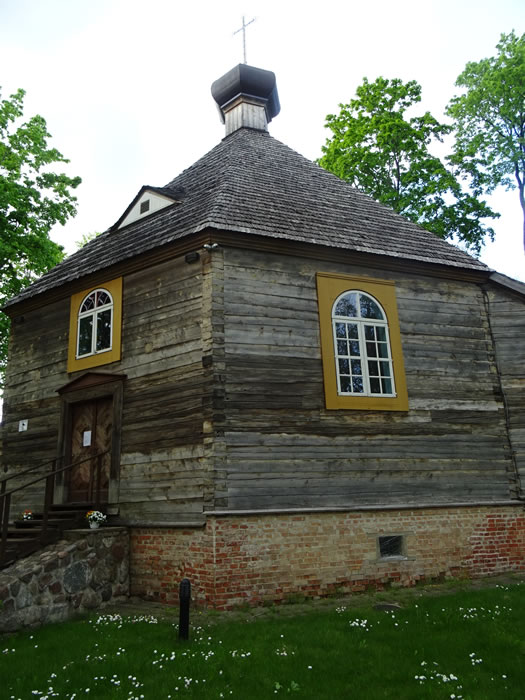
Antanavas chapel is a unique architectural monument, one of the three surviving hexagonal wooden chapels in Lithuania. The large wooden hexagonal chapel was built at the end of the XVIII century on the territory of the former two-storey brick manor of Antanavas as a manor chapel and a family burial place. It was built by the elder of Antanavas, the owner of the manor Jonas Antanas Chrapovickis. In the first half of the XIX century, the manor belonged to the landowners Šabunevičiai, who repaired the chapel around 1850 and decorated its interior with paintings. The owner of the manor Stanislovas Šabunevičius was buried in the chapel around 1860, later - his son Edvardas and daughter-in-law. After the burial in 1944, the crypt was torn off, the coffin was damaged and part of the basement was used as a warehouse. Until 1963 the chapel was used as a house of prayer, later it was emptied due to an emergency. This architectural monument, whose exterior has not changed since its construction, collapsed significantly in 2005 when its roof broke. 2007 the department of cultural heritage allocated funds to prepare a project for the conservation, restoration and restoration of the chapel, which was later supplemented by financial support from the European Economic Area Fund and Norway. The chapel was restored, a number of surviving authentic materials were used, and the coffins of the last owner of the manor, Šabunevičius, his son and daughter-in-law, who stood in a torn burial crypt in 1944, were restored. After placing the remains in them, the coffins were built in the basement of the chapel. Restoration works of the chapel were completed in 2010.